How Global Brands Automate Technical Search Success

The 2026 State of Technical SEO Automation
Handling search exposure for sites including millions of pages requires a departure from standard manual workflows. In 2026, the volume of information produced by enterprise-level websites has surpassed the capability of human-led auditing groups. This shift has actually forced a relocation towards self-governing systems that keep an eye on, detect, and repair technical problems without direct human intervention. The focus has moved from recognizing problems to developing self-healing procedures that keep site health throughout huge URL sets.
Modern search engines now use agent-based crawlers that analyze JavaScript and interactive elements with the very same proficiency as a human user. This advancement implies that easy HTML photos are no longer sufficient for high-volume sites. Rather, companies are adopting cloud-native environments where SEO logic lives at the edge. By processing demands through material shipment networks, services can inject structured information or fix broken canonical tags before the online search engine bot ever reaches the origin server. This approach decreases the stress on internal development teams while ensuring that technical site architecture remains optimized around the clock.
Large enterprises often try to find expertise in Asia Virtual Solutions Hosting to manage their increasing information demands. This reliance on automated oversight helps avoid the common mistake of crawl spending plan waste, where search bots invest too much time on low-value or replicate pages. In 2026, predictive algorithms examine log files in real time to determine which sections of a site are probably to convert, indicating spiders to prioritize those areas instantly.
Integrating Cloud Computing with Browse Strategy
The merging of cloud computing and search optimization has actually altered how services manage massive updates. In the past, a worldwide modification to metadata might take weeks of development cycles and release windows. Today, serverless functions enable SEO specialists to press updates globally in seconds. These functions serve as a middle layer, intercepting inbound demands and modifying the action based on live efficiency information. If a specific category page in the regional market starts trending, the system can instantly boost that page with additional schema or internal links to capitalize on the rise.
Cloud companies have actually presented specific tools created specifically for these high-velocity environments. These tools keep track of for indexation drift-- a phenomenon where search engines slowly drop pages from the index due to subtle technical errors. Organizations are transitioning toward Asia Virtual Solutions Advanced SEO Servers to keep up with the rate of search engine updates. By utilizing machine learning designs to compare the live site versus the cached version in search engine result, these systems identify disparities and trigger a re-crawl demand the moment a variance is found.
This automatic approach also reaches internationalization. Handling hreflang tags for thousands of items across lots of countries was when a logistical headache vulnerable to error. In 2026, automated mapping systems use cloud-based databases to verify that every regional version of a page points correctly to its equivalents. If a product heads out of stock in the local area, the system adjusts the tags to direct users and search bots to the nearest offered local option, protecting the user experience and search equity.
Handling Crawl Budgets for Enormous URL Sets
Crawl spending plan optimization has become an accurate science instead of a series of guesses. For websites with over 100,000 pages, the effectiveness of each bot check out straight affects income. Automated systems now utilize historical crawl data to develop designs of bot behavior. These designs predict when an online search engine is likely to go to a specific directory site and make sure that the most crucial material is prepared and available. If the system spots that a bot is spending too much time on paginated results or filter specifications, it dynamically changes the robots.txt file or applies "noindex" tags at the edge to reroute the bot's attention.
The requirement for Asia Virtual Solutions for Business Growth has actually ended up being a concern for services in the local area. Without these automated safeguards, high-volume sites run the risk of having their most rewarding pages overlooked while bots get stuck in "spider traps" or limitless loops of sorted item lists. By carrying out AI-driven throttling, a website can really slow down a bot's access to low-priority locations while clearing a fast-track for brand-new arrivals or high-margin items.
In addition, log file analysis has transitioned from a regular monthly retrospective to a live dashboard. SEO specialists in 2026 use these dashboards to see precisely how search bots are communicating with the site structure at any given moment. When a drop in crawl frequency is found, the system immediately audits the affected section to find the origin, whether it is a minor boost in latency or a recursive internal link structure that has actually puzzled the crawler.
The Increase of Generative SEO Auditing
Static SEO audits are mainly a thing of the past. In 2026, auditing is a continuous procedure that utilizes generative AI to write code fixes for recognized concerns. When a crawl recognizes a missing alt tag or an improperly structured header hierarchy, the system can draft a pull demand for the advancement team or use a temporary repair at the CDN level. This "hotpatching" ensures that the website remains certified with search engine guidelines even during long advancement sprints.
These systems are likewise efficient in analyzing content for "semantic gaps." By comparing the website's material versus the top-performing pages in a particular niche, the AI recommends technical additions-- such as specific frequently asked question schema or table-of-contents markup-- that would make the page more helpful for both users and browse agents. This is particularly useful for large-scale digital platforms that host vast amounts of user-generated material or regularly updated item listings.
The focus has actually moved toward "Agent Optimization." As more users use AI personal assistants to discover details, technical SEO must guarantee that these agents can quickly parse and sum up site information. This involves moving beyond basic HTML and into extremely structured JSON-LD formats that supply clear, unambiguous responses to intricate questions. Automated systems verify this data stability every time a page is updated, making sure that the details provided to search assistants is constantly accurate and present.
Security and Efficiency in Automated SEO
Performance remains a core pillar of technical success, but the metrics have evolved. In 2026, search engines prioritize websites that show steady performance under heavy load. Automated SEO tools now incorporate with performance tracking systems to correlate search rankings with server reaction times. If a particular server node in the local area starts to lag, the SEO system can signify the load balancer to move bot traffic to a quicker node, avoiding a momentary efficiency dip from affecting the site's long-lasting search standing.
Security also plays a role in technical presence. Online search engine are increasingly conscious websites that reveal indications of compromise or harmful injections. Automation enables consistent "integrity checks" where the system compares the present page source versus a recognized good variation. If an unapproved script or a suspicious redirect is found, the system can immediately revert the page to its last secure state and signal the security team. This defense of the website's credibility is important for keeping trust with both users and search algorithms.
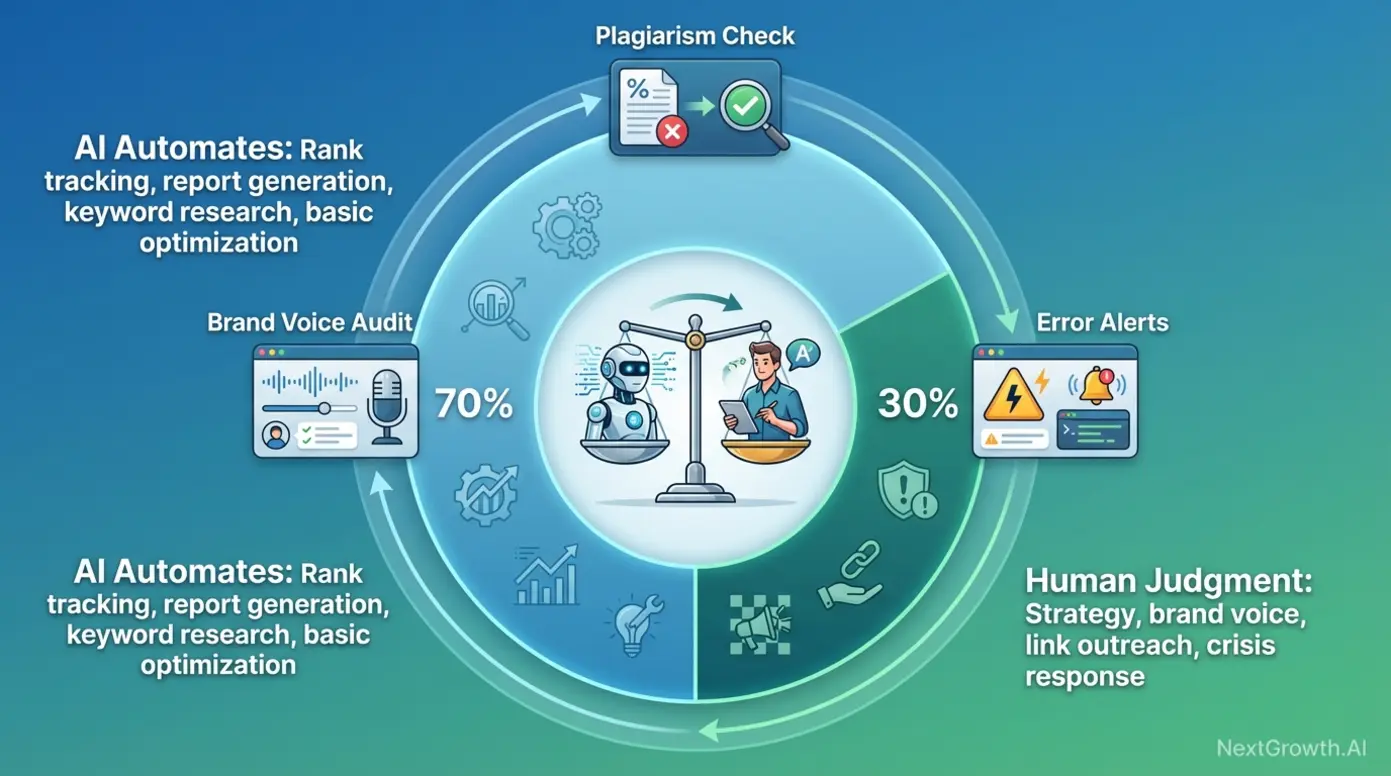
Utilizing automated technical monitoring permits organizations to preserve a lean SEO group that concentrates on top-level strategy rather than the minutiae of fixing damaged links or upgrading meta tags. The software application manages the recurring tasks, while the humans interpret the information to make more comprehensive organization choices about content direction and market expansion. This balance is what specifies effective search operations in 2026.
Future-Proofing Search Infrastructure
The 2026 environment needs a frame of mind shift towards infrastructure as code. SEO is no longer simply a marketing function; it is a vital component of a company's technical stack. By treating SEO rules as part of the codebase, companies can evaluate modifications in staging environments that imitate how a search bot will respond before the code goes live. This avoids "ranking shocks" where a small code change mistakenly de-indexes a significant area of the site.
As online search engine continue to refine their algorithms, the only constant is the requirement for speed and accuracy. The combination of AI and cloud computing has actually provided the tools required to satisfy these demands at scale. Whether it is through real-time schema injection, automated crawl management, or edge-based efficiency optimization, the goal stays the exact same: guaranteeing that the best content reaches the ideal user at the correct time. The companies that thrive are those that see automation not as a luxury, but as the foundation of their digital existence.
Looking ahead, the function of the technical SEO expert will continue to progress into that of a data designer. They will develop the systems that allow AI to do the heavy lifting, guaranteeing that the reasoning governing the automation is sound and aligned with the brand's objectives. In the local market, the competitors for exposure will only heighten, making these automated systems the primary differentiator between market leaders and those who struggle to stay visible in a progressively crowded digital world.



&description=SEO%20automation%20only%20pays%20off%20when%20the%20tool%20matches%20the%20task.%20We%20map%20the%2010%20best%20SEO%20automation%20tools%20of%202026%20to%20the%20specific%20jobs%20they%20take%20off%20your%20plate%20%E2%80%94%20content%2C%20crawls%2C%20rank%20tracking%2C%20reporting%2C%20and%20proof%20of%20revenue.)