Enhancing User Experience Through Edge-Based Browse Performance
Cloud Strategies for Search Visibility in 2026
The technical requirements for web presence have actually shifted significantly by 2026. Online search engine now process info with far higher speed and precision than in previous years. This advancement has forced a relocation away from conventional, heavy server environments toward more fluid, event-driven architectures. Serverless computing has actually moved from a speculative option to a standard technique for managing how bots communicate with digital content.Web crawlers in 2026 no longer simply download HTML and move on. They mimic intricate user environments, assess execution speed, and measure the expense of rendering a page. Large, monolithic servers often have a hard time to react to the sudden bursts of traffic these sophisticated bots generate. When a search engine chooses to crawl millions of pages in a single window, a standard server may slow down or fail, leading to lost indexation. Serverless architecture avoids this by scaling automatically, ensuring every demand from a spider receives a prompt action without manual intervention.
The Effect of Serverless Functions on Site Crawlability

Effectiveness in 2026 is determined by the capability of a website to supply data exactly when it is requested. Serverless functions, frequently described as Functions as a Service (FaaS), allow designers to run little pieces of code in action to specific triggers. When a search bot goes to a site, a serverless function can quickly determine the very best variation of the page to serve. This might imply offering a pre-rendered HTML photo or a light-weight JSON-LD data packet.Technical groups have actually found that buying SEO NEO Automation Platform assists keep a tidy crawl course. Instead of requiring a bot to navigate through complex JavaScript execution, serverless reasoning can obstruct the demand at the network edge. This process, often called Edge SEO, moves the heavy lifting far from the user's web browser and the main server. By handling metadata injection, header management, and reroutes at the edge, the website remains quick and accessible for both human beings and machines.The 2026 search environment focuses on stability. If a server takes too long to get up-- a phenomenon understood as a cold start-- the bot might lower the website's crawl frequency. Modern cloud providers have mainly mitigated these delays, making the shift to serverless nearly undetectable to the end user while offering huge benefits for search engine optimization.
Optimizing Indexation with Cloud-Native Logic
Data from the early part of 2026 suggests that crawl spending plan management has actually become a primary issue for high-volume websites. Online search engine assign a specific quantity of time and resources to each domain. If a website is sluggish or returns regular mistakes, that budget is squandered. Serverless setups supply a method to keep an eye on and handle this budget plan in real-time. SEO NEO User Support Guides has actually ended up being necessary for modern services aiming to stay competitive in congested search outcomes. By utilizing serverless workers, a site can identify which bot is going to and change its reaction appropriately. For example, if a bot with limited rendering abilities arrives, the serverless layer can serve a fully rendered variation of the page. If a more innovative bot shows up, it can serve a modular variation that allows the bot to pick the data it needs. This adaptability guarantees that no matter how the search engine innovation modifications, the website stays compatible.The usage of cloud-native reasoning likewise permits for better handling of localized content. In 2026, search results page are hyper-local. Serverless functions can identify the geographical origin of a spider and serve material that specifies to that region. This happens without the requirement for hundreds of separate physical servers, as the cloud provider handles the distribution of the code throughout its global network.
Real-Time Metadata Management in 2026

Metadata is no longer a static aspect of a web page. In the existing 2026 environment, online search engine search for live updates, such as stock levels, rates, or event accessibility, within the search engine result themselves. Hardcoding this info into every page is no longer feasible for massive operations. Serverless functions resolve this by pulling live data from a database and injecting it into the page as the crawler requests it.This dynamic method guarantees that the details a bot sees is always precise. When a price modifications in a central database, a serverless function can update the schema markup throughout thousands of pages instantly. This avoids online search engine from showing outdated information, which can cause charges or a drop in click-through rates. Lots of companies are concentrating on SEO NEO for SEO Professionals to guarantee their technical infrastructure supports these rapid updates.Security also contributes in how bots perceive a website. Serverless architectures frequently supply a smaller surface area for prospective attacks. Because the code only runs when set off and does not depend on an irreversible server with open ports, the threat of typical vulnerabilities is decreased. Search engines in 2026 weigh security greatly in their ranking algorithms, and a site that is naturally more safe typically discovers it simpler to maintain high rankings.
Challenges of Serverless Computing for SEO
While the benefits are significant, the shift to serverless is not without its difficulties. Developers should take care with how they structure their functions to prevent unneeded complexity. If a lot of functions are chained together, it can produce a "dispersed monolith" that is more difficult to debug and possibly slower than a standard server.Logs and tracking are also different in a serverless world. Considering that there is no single server to check, designers need to utilize dispersed tracing to see how a crawler moved through their site. Comprehending these logs is important for determining where a bot might be getting stuck. By 2026, numerous monitoring tools have actually been developed particularly for this purpose, supplying clear visualizations of how serverless functions are carrying out during crawl events.The expense structure of serverless can also be unexpected. While it is frequently less expensive for low to medium traffic, an enormous surge in spider activity can result in an abrupt increase in function execution costs. Smart designers use rate limiting and caching at the edge to ensure that they are not paying for the same request several times. This balance in between being available for crawlers and managing expenses is an essential part of technical method in 2026.
The Future of Search Engine Interaction
Looking toward the latter half of 2026, the interaction between search bots and websites is ending up being more like a discussion. Browse engines are starting to utilize APIs to request specific updates rather than crawling whole pages. Serverless architecture is completely fit for this API-first method. Instead of a site being a collection of fixed files, it becomes a series of endpoints that can offer precisely the data the online search engine asks for.The combination of automated reasoning within cloud environments has actually eliminated a number of the old barriers to entry for smaller sized sites. Even a site with restricted resources can now have the exact same international reach and speed as a significant corporation by utilizing the exact same serverless infrastructure. This democratization of web efficiency has actually caused a more diverse and competitive search environment.Speed remains the most crucial aspect for success. As online search engine continue to shorten the time in between a page being released and it appearing in outcomes, the ability to serve content quickly is non-negotiable. Serverless architecture provides the speed, scalability, and flexibility required to meet these needs. The focus has actually moved far from managing hardware and toward composing clean, efficient code that reacts to the needs of the web in real-time. Organizations that have adopted these cloud-native techniques find themselves much better prepared for the future. They are no longer kept back by the restrictions of physical hardware or the slow deployment cycles of the past. Rather, they can repeat rapidly, testing brand-new SEO theories and deploying modifications throughout their whole digital existence in seconds. This dexterity is the specifying characteristic of the 2026 digital environment.
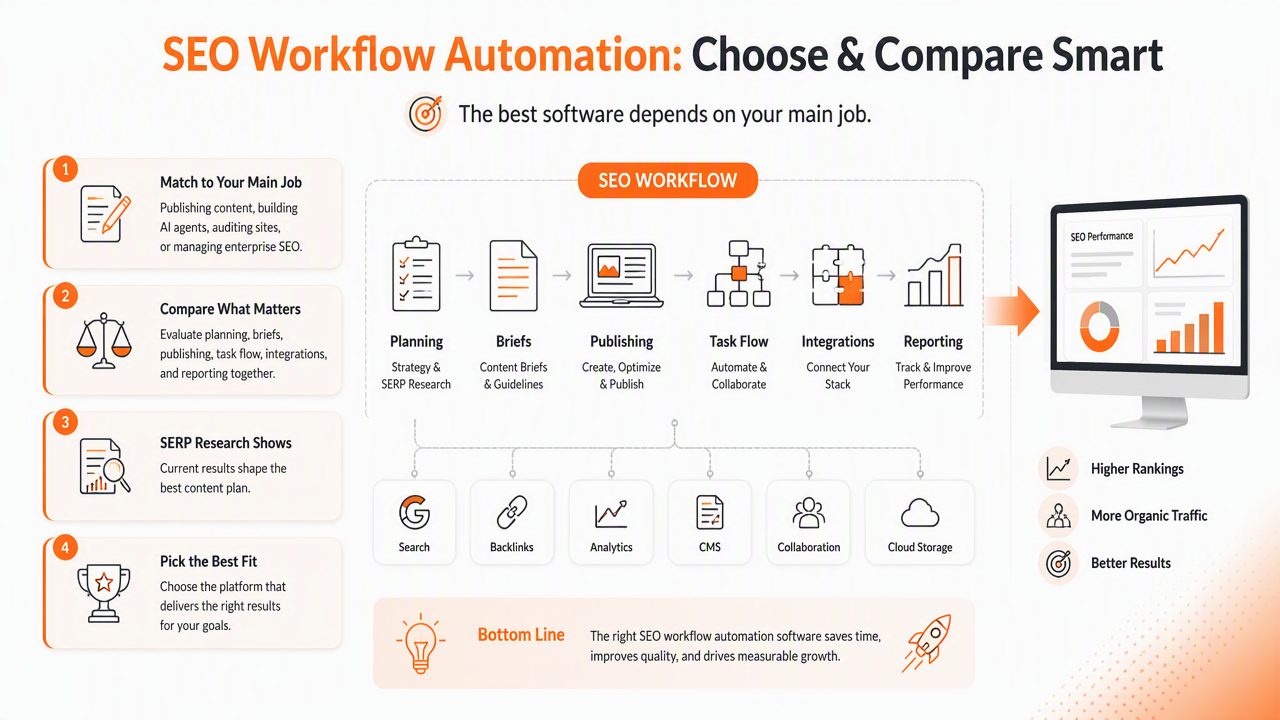


&description=SEO%20automation%20only%20pays%20off%20when%20the%20tool%20matches%20the%20task.%20We%20map%20the%2010%20best%20SEO%20automation%20tools%20of%202026%20to%20the%20specific%20jobs%20they%20take%20off%20your%20plate%20%E2%80%94%20content%2C%20crawls%2C%20rank%20tracking%2C%20reporting%2C%20and%20proof%20of%20revenue.)